



Energy efficiency is a core requirement of modern building codes to meet energy benchmarking goals within cities across the country.
Beyond where buildings source energy, it’s important to maximize that energy usage to prevent waste that leads to rising utility costs and increased emissions.
Energy consultants use blower door tests to measure the amount of energy contained within the building envelope, diagnose where air leaks are occurring, and implement efficiency measures.
For builders, failing a blower door test can delay occupancy and trigger costly rework. For homeowners, poor results often explain high utility bills, comfort issues, and indoor air quality problems.
The good news is that most blower door failures are predictable, preventable, and fixable.
This guide explains what a blower door test measures, how results are interpreted, why states require it, and how working with an energy consultant can dramatically improve your chances of passing while reducing long-term energy costs.
What Is a Blower Door Test?
A blower door test is a diagnostic tool used to measure how airtight or insulated a home is. The results can be used to determine how much air (i.e., cool air or heat) is leaking outside of your home and costing you money.
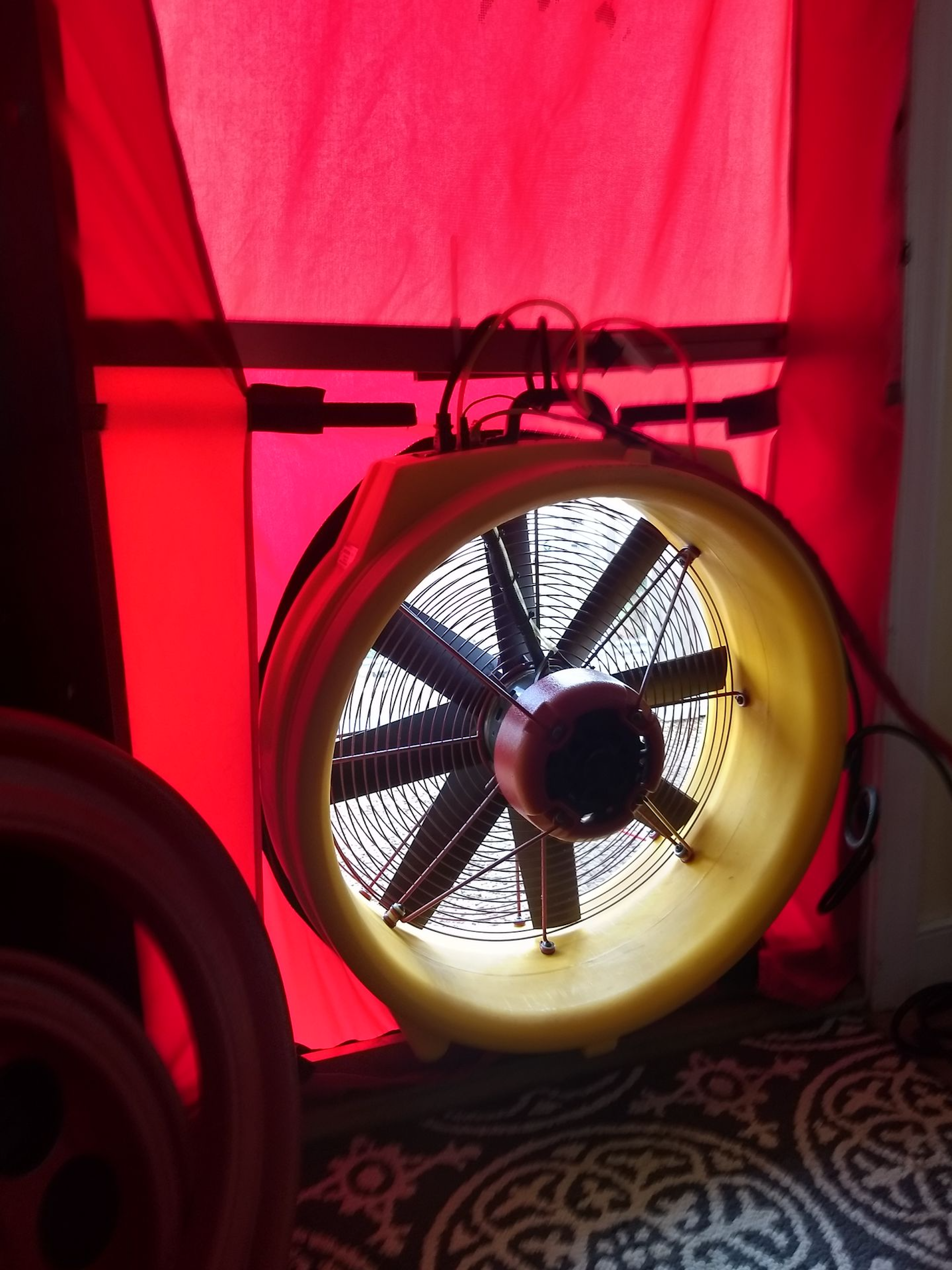
The test is conducted by fitting a blower door to the frame of your front or back door. The blower door is equipped with a giant fan and motor in the middle, which sucks out air from your home and measures the difference in air pressure between the inside and outside of your home via digital gauges.
The results are calculated by the amount of “air changes per hour” (ACH), or how often the fan recirculates the air in your home over an hour-long period.
In layman’s terms, the higher your ACH score–or the number of times air would be replaced entirely in an hour-long period by outside air–the leakier your home is. ACH scores range from 2 to 12 on average, with lower numbers indicating a more insulated home.
The test may also measure airflow in cubic feet per minute (CFM), which indicates how much air is moved past the fan during the test. Generally, the higher the airflow in CFM, the leakier the home–although this is not always precise, which is why ACH is preferred.
The Importance of the Blower Door Test
So, why should we care about air leakage in a home?
Well, your home’s airtightness regulates several important factors that include:
- How much heat will escape from your home in the winter
- How much cool air will escape from your home in the summer
- How many outdoor contaminants can enter your home via natural passages
- How well can air condensate in your home
Understanding your home’s air tightness and insulation grade can help you choose the right heating and ventilation equipment to manage your home’s energy efficiency, humidity, and air quality.
You can save money by improving your air tightness and enjoy cleaner air in your home.
When and Why Blower Door Tests Are Required
Blower door tests are most commonly required during the post-construction phase of new residential builds, before a certificate of occupancy is issued. Many states now include airtightness testing as part of their energy code enforcement.
Blower door testing is typically required when:
- A new home or major addition is completed
- Energy code compliance must be verified
- Utility rebates or incentive programs are involved
- A builder must demonstrate Energy Star or high-performance standards
Even when not required, blower door testing is often recommended for existing homes before insulation upgrades, HVAC replacements, or major renovations to ensure improvements are properly targeted.
Understanding Blower Door Test Scores
There are two ways to interpret blower door test results, depending on your unit of measurement.
Generally, we divide the following blower test scores by their ACH number to determine how leaky a home is:
- 2-4 ACH: A tightly sealed home that would pass inspections in all 50 states.
- 5 ACH: A moderately sealed home., but still an ideal target for older homes that are harder to insulate.
- 6-9 ACH: A leaky home that generally needs improvements to pass an inspection in states with the requirement.
- 9-12 ACH or more: A very leaky home that requires extensive insulation work.
On the other hand, if you use CFM to calculate your blower door test, the rule of thumb is to achieve a CFM below your square footage. So a 2000 sq. ft. home should generally aim for below 2000 CFM on its blower door test.
Naturally, the lower your CFM, the better your air tightness.
What States Require a Blower Door Test?
Blower door tests have become a popular tool for many states to help them meet individual energy initiatives and are required by some states in the post-construction phase to pass inspection. These states include:
- New York
- Michigan
- Pennsylvania
- Florida
- Georgia
Several other states actively encourage blower door testing and have contemplated measures to make it mandatory for new construction homes.
Regardless, a blower door test is often a very effective tool for promoting energy efficiency in new or existing homes. It should be taken by all homeowners looking to save money on their energy bills.
What Are the Biggest Sources of Air Leakage?
Many buildings fail or score high on their blower door test because there is an unsealed source of air leakage in their home.
Generally, the most common sources of air leakage in any home occur at or around:
- Unsealed doorframes
- Old windows
- Unsealed roofs
- Fireplace inserts and open flues
- Bath fans
- Recessed light fixtures
- Vented heat appliances
- Gaps between the foundation and wall framing
Sealing these sources of air leakage is the most surefire way to make your home more airtight and to pass your blower door test.
Blower Door Testing vs. Ventilation: Why Airtight Homes Still Need Fresh Air
A common misconception is that passing a blower door test means a home is “sealed shut.” In reality, the goal is controlled airtightness, not trapping stale air indoors.
The blower door test identifies uncontrolled air leakage—gaps and cracks where air escapes randomly—so those leaks can be sealed and replaced with intentional ventilation.
Here’s why that distinction matters. When a home leaks air through random pathways, it loses energy, comfort, and moisture control. Cold drafts in winter, hot spots in summer, and humidity problems are all symptoms of uncontrolled airflow.
Sealing those leaks improves efficiency, but it also means ventilation must be handled correctly to maintain indoor air quality.
This is where energy consultants add value beyond the test itself. They help balance airtightness with proper ventilation strategies such as bathroom exhausts, kitchen ventilation, or whole-house systems like ERVs and HRVs. These systems bring in fresh air in a measured, predictable way, without sacrificing energy performance.
Ways an Energy Consultant Can Help You Improve Your Score
Hiring an energy consultant during or after the construction process is a great idea for construction managers to proactively address any energy concerns and improve their blower door test.
An energy consultant will audit your HVAC equipment and airflow to determine any sources of leaks and where improvements can be made to existing equipment for savings. In some cases, switching from a vented water heater to an Energy Star electric pump could create tremendous savings.
An energy consultant can also conduct a thermal inspection and offer ideas for additional insulation to prevent air leakage.
Hiring an energy consultant can help you save money and conserve more energy.
FAQs
What is a good blower door test score?
Most modern energy codes require between 3 and 5 ACH, depending on climate zone and building type. Lower scores indicate better airtightness and typically translate to lower energy loss and improved comfort.
Can older homes pass a blower door test?
Yes, but older homes often need targeted air sealing and insulation upgrades first. Common improvements include sealing attics, basements, rim joists, and older window or door assemblies.
Does a blower door test damage my home?
No. The test is non-destructive and completely safe when performed by trained professionals. It does not stress the structure or harm mechanical systems.
How long does a blower door test take?
Most tests take 30–60 minutes, depending on the building’s size and complexity. Additional time may be required if diagnostics or infrared scanning are included.
Can a blower door test lower my energy bills?
Yes. Identifying and sealing air leaks often leads to immediate and measurable energy savings. Many homeowners see reduced heating and cooling costs after recommended improvements are completed.
Is blower door testing required for renovations?
It may be required for major additions or renovations that trigger compliance with the updated energy code. Local building departments typically determine when testing is mandatory.
What happens if I fail a blower door test?
You’ll need to address the identified leakage points and schedule a retest before passing inspection. Energy consultants can prioritize fixes that deliver the biggest improvement with the least disruption.
Do blower door tests improve indoor air quality?
Yes. Sealing uncontrolled air leaks allows ventilation to be managed intentionally rather than randomly. This leads to better humidity control, fewer outdoor pollutants, and a healthier indoor environment.