



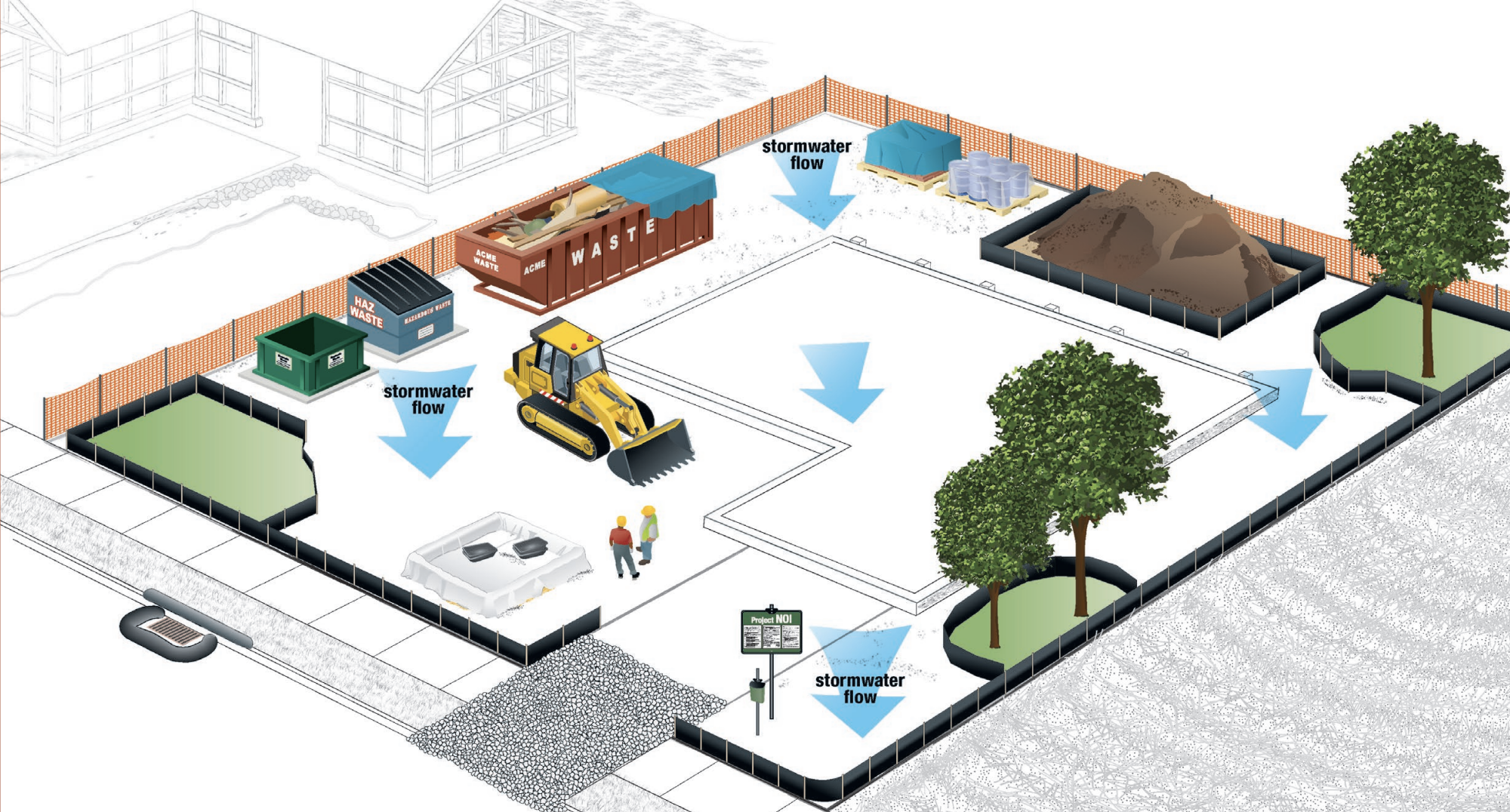
Construction activities significantly alter the natural landscape, creating high risks for environmental degradation. When land is cleared, graded, or excavated, the removal of vegetation and topsoil exposes loose earth to wind and rain.
According to the U.S. Environmental Protection Agency (EPA), sediment runoff rates from construction sites are typically 10 to 20 times those from agricultural lands and up to 2,000 times those from forested areas. Beyond sediment, stormwater can transport on-site pollutants, including concrete washout, fuels, pesticides, and construction debris, directly into local waterways and storm sewer systems.
These environmental impacts have led to a stringent regulatory framework under the Clean Water Act. The National Pollutant Discharge Elimination System (NPDES) program requires operators of construction sites that disturb one acre or more of land to obtain permit coverage before breaking ground. These regulations are designed to ensure that construction proceeds without compromising community water quality or damaging aquatic ecosystems.
A core requirement for obtaining permit coverage is the development of a Stormwater Pollution Prevention Plan (SWPPP).
A SWPPP is a comprehensive, site-specific document that identifies all potential sources of pollution and describes the Best Management Practices (BMPs) implemented to reduce pollutant discharge.
This guide will discuss SWPPP requirements for construction sites that require an NPDES permit and how to implement BMPs while maintaining compliance.

What Is a SWPPP On a Construction Site?
A Stormwater Pollution Prevention Plan (SWPPP) is a site-specific document that outlines how your project will prevent sediment, debris, and pollutants from entering stormwater systems and waterways.
SWPPP construction compliance protects local water quality and keeps your project legally operational. Without a proper stormwater management plan, you risk stop-work orders, fines up to $37,500 per day per violation under the Clean Water Act, and delays that cost far more than prevention.
The plan must include site maps, erosion control measures, inspection schedules, and contact information for responsible parties. It is a living document that evolves as your site conditions change.
Key Elements of the SWPPP for Construction Sites
To ensure regulatory compliance and site safety, a SWPPP used on active construction zones must include the following core elements:
- Site Description and Overview: SWPPPs begin with a detailed site description that includes information on project size, location, and potential environmental impacts. The site description seeks to identify any areas of the site that are vulnerable to erosion so that subsequent steps may be taken to protect these areas.
- Erosion and Sediment Control: One of the primary focuses of SWPPPs is to control erosion and sedimentation. Plans outline specific measures, such as installing silt fences, erosion-control blankets, and sediment basins, to prevent soil erosion and minimize sediment transport into stormwater runoff.
- Employee Training and Awareness Programs: Ensuring that construction site personnel are trained and aware of best practices is a crucial aspect of SWPPPs. These programs educate workers on pollution-prevention measures, spill-response procedures, and the importance of adhering to the SWPPP.
- Stabilization Techniques: SWPPPs detail stabilization techniques to establish vegetation and prevent soil erosion once construction activities are completed. This may involve seeding, mulching, and other measures to stabilize disturbed areas.
- Inspection and Continuous Documentation: Since SWPPPs are living documents that require continuous adjustment, all changes and related documents will be recorded in the SWPPP. All inspections and their results will also be recorded in the document.
When Is a SWPPP Required in Construction?
SWPPP implementation is mandatory when construction activities disturb one acre or more of land, including smaller sites that are part of a larger common development plan. You must obtain a National Pollutant Discharge Elimination System (NPDES) permit before breaking ground.
Key triggers for SWPPP requirements include:
- Grading, excavation, or demolition activities
- Road construction or land development projects
- Projects near streams, wetlands, or municipal stormwater systems
- Grading permit compliance conditions set by local authorities
Even if your project is under one acre, many municipalities require stormwater pollution prevention measures during grading permit approval. Check with your local building department and state environmental agency before starting work.
How to Implement Erosion Control on Construction Sites
Effective erosion control begins before ground disturbance. To maintain compliance and prevent sediment discharge, perimeter controls, such as silt fencing and sediment barriers, must be installed along all downslope boundaries before any grading activities commence.
Step-by-Step SWPPP Implementation Process:
- Prioritize Perimeter Controls: Install silt fences, fiber rolls (wattles), or sediment barriers along property lines and sensitive areas to intercept runoff.
- Stabilize Site Access: Construct stabilized construction entrances using crushed stone pads to prevent “track-out” of mud and sediment onto public roadways.
- Protect Storm Drain Inlets: Install high-visibility filters or sediment traps around all catch basins to ensure untreated runoff does not enter the municipal stormwater system.
- Implement Phased Grading: Minimize the amount of exposed soil at any given time. Per EPA standards, any disturbed areas that will remain inactive for 14 days or more must be stabilized with mulch, seeding, or blankets.
- Execute Weekly Maintenance: Inspect all Best Management Practices (BMPs) weekly. Repair damaged fencing, remove sediment buildup when it reaches 50% capacity, and replace ineffective barriers immediately.
Erosion control inspections are mandatory and must occur at least once every seven days and within 24 hours of any significant rain event. Each inspection must be documented with date-stamped photos, detailed notes on BMP performance, and a log of all corrective actions taken to demonstrate regulatory compliance.
How Long Must You Maintain Your Construction SWPPP?
SWPPP construction requirements remain in effect until your site achieves final stabilization, meaning all construction activities are complete and vegetation or permanent cover is established across disturbed areas.
You must maintain erosion control measures and continue inspections until you submit a Notice of Termination (NOT) to your permitting agency. This typically occurs when:
- Final grading is complete
- Vegetation is growing or permanent surfaces are installed
- Temporary controls are removed and disposed of properly
Keep all inspection logs, maintenance records, and photos for at least three years after project completion. Regulatory agencies can request documentation during that period.
Common SWPPP Violations and How to Avoid Them
The most frequent violations stem from poor maintenance rather than missing equipment. Inspectors cite projects for torn silt fences, clogged inlet protection, and sediment tracking onto roads.
Top compliance failures include:
- Skipping post-storm inspections or failing to document them
- Not repairing damaged erosion controls within 7 days
- Allowing sediment discharge into storm drains or waterways
- Missing grading permit compliance conditions in local permits
- Inadequate stabilization of inactive areas after 14 days
Assign a qualified SWPPP practitioner who conducts inspections, maintains logs, and coordinates repairs. Train all site personnel on stormwater requirements during safety briefings. Keep the SWPPP on-site and accessible for regulatory inspections.
FAQs
Who is responsible for developing the SWPPP for a construction project?
The responsibility for developing the SWPPP typically falls on the project owner or the party in charge of construction. This may involve collaboration with environmental consultants or professionals experienced in stormwater management.
When should the SWPPP be developed?
The SWPPP should be developed during the planning phase of a construction project, well before any ground-disturbing activities commence. It is a proactive document that guides the implementation of stormwater management measures throughout the construction process.
What happens if a construction site fails to implement a SWPPP?
Failure to implement a SWPPP can result in regulatory penalties and fines. The Environmental Protection Agency (EPA) and other relevant authorities may take enforcement actions against non-compliant construction sites, which can lead to legal consequences and additional costs.
How often should SWPPPs be updated?
SWPPPs should be regularly updated to reflect changes in project scope, conditions, or regulations. Regular site inspections may also identify the need for updates. Construction sites should maintain a dynamic SWPPP that adapts to evolving circumstances.
Are there specific requirements for SWPPPs based on the size of the construction project?
Yes, the requirements for SWPPPs may vary based on the size and nature of the construction project. Larger projects with higher potential for environmental impact may have more stringent requirements. It is essential to consult local regulations to determine specific criteria.
How often must construction sites inspect erosion controls?
Inspections must occur at least once every seven days and within 24 hours after any rain event of 0.5 inches or more. Document all inspections with photos and notes on BMP performance.
How much does SWPPP compliance cost?
Plan preparation typically costs $1,500–$5,000. Total implementation costs, including materials, inspections, and maintenance, range from $5,000–$20,000+, depending on site size and project duration.