



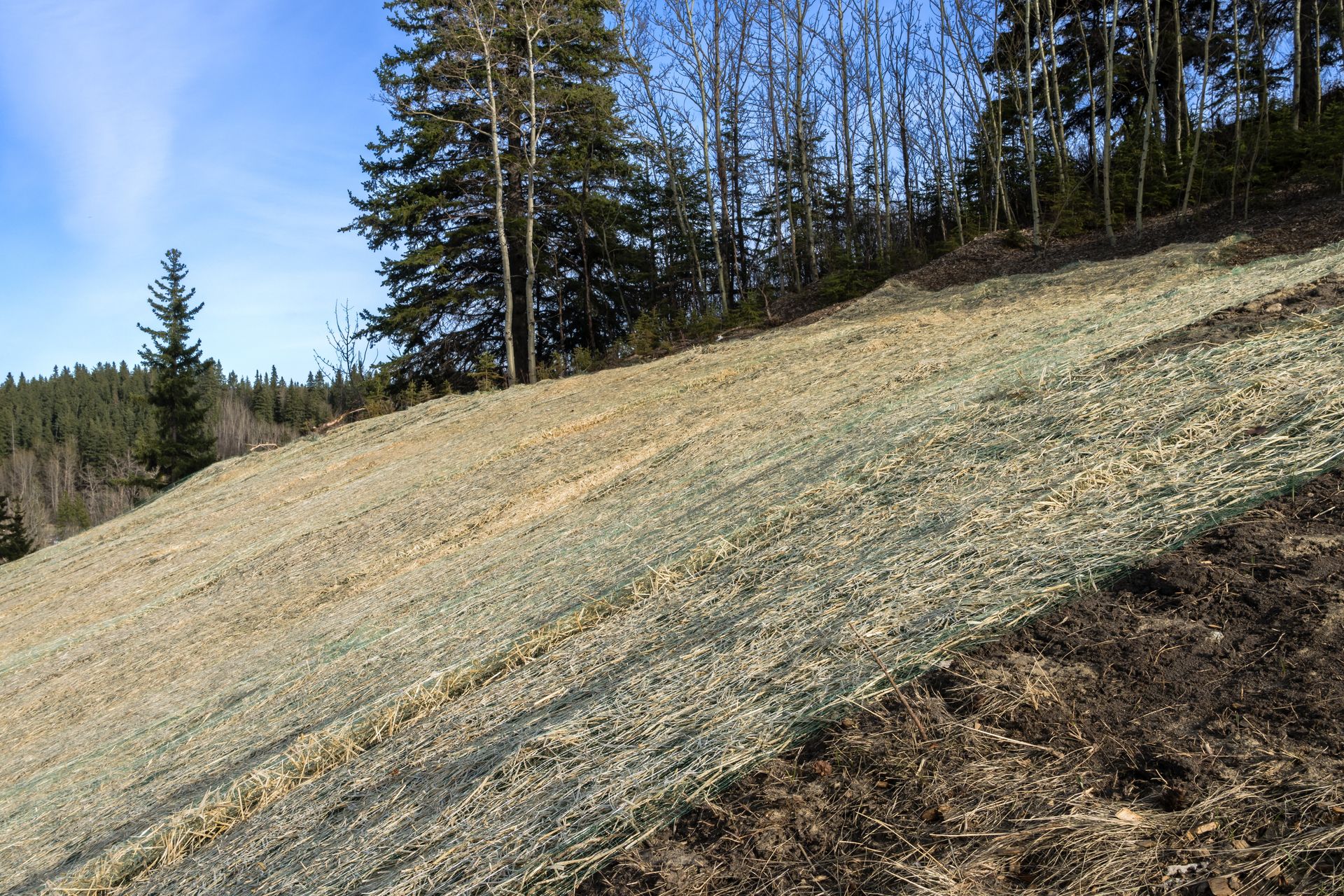
Controlling erosion on slopes is best achieved through natural vegetative cover, erosion-control blankets, and engineered structures such as silt fences or terracing.
Implementing these practices is vital to maintaining regulatory compliance under your SWPPP, avoiding costly project delays, and preventing severe downstream flooding or property damage.
On most active worksites, soil displacement is commonly caused by heavy rainfall, wind exposure, and the natural downward pull of gravity on loose soil.
Slopes are especially vulnerable to erosion as the high velocity of channel runoff rapidly strips away unprotected topsoil and carves deep rills into the hillside.
If left unmanaged, slope erosion can lead to sedimentation and, in extreme cases, mudslides.
This guide details the most effective artificial devices and natural controls available to stabilize slopes against erosion on active worksites, and why it’s important for site managers to take it seriously.

Why Slopes Are Naturally Vulnerable to Erosion
Slope erosion is a naturally occurring phenomenon that can occur on residential sites, urban environments, and active workzones. The three main culprits of slope erosion include rainwater, wind, and human-related activities, such as agriculture and construction.
Unlike flatter areas of your site, gravity tends to concentrate rainwater runoff on slopes, making the soil more susceptible to sheet erosion–erosion caused by large volumes of water that dislodge the soil.
Likewise, the bases of slopes can be subject to rill erosion, which occurs when excess moisture cuts small tunnels or gullies into the soil.
In addition, sloped hills and banks may be directly affected by strong winds, which can erode the soil and gradually dislodge it.
In areas where slopes are near discharge points or water sources, erosion can lead to rapid pollution.
For these reasons, it’s essential to take extra precautions to prevent erosion on sloped hills.
The Importance of Protecting Slopes from Erosion During Construction
Soil erosion can strip the topsoil of valuable nutrients and leave the ground more vulnerable to sedimentation. In the latter case, loose sediment particles can be dislodged and mixed with rainwater runoff, increasing turbidity and polluting local streams and water bodies.
Beyond the standard effects of erosion, slope erosion can also lead to costly consequences, such as flooding that damages nearby infrastructure or even landslides.
From a cost perspective, you will save more money in the long term by preventing erosion rather than restoring the soil after it’s been eroded.
Finally, to maintain proper permitting or discharge stormwater runoff into a public water system, you will need to have appropriate controls in place to prevent slope erosion.
Best Practices to Control Erosion on a Slope
Implementing the right best management practices (BMPs) is essential for stabilizing vulnerable hillsides. Environmental consultants rely on the following seven proven methods to mitigate slope erosion and manage stormwater runoff effectively.
1. Vegetative Cover
Planting vegetative cover is the most sustainable and cost-effective method to protect bare slopes. Key application techniques include:
- Hydroseeding: This involves spraying a thick slurry of grass seeds, tackifiers, fertilizers, and other additives onto hills to promote rapid grass establishment.
- Mulching: A thick layer of organic materials is spread across hills to protect the soil underneath and encourage the growth of new seeds.
- Cover Crops: Temporary or permanent plants are planted to protect the soil, increase infiltration, and slow stormwater runoff.
The biggest benefit of this approach is that it reduces the need to revitalize these areas after projects have ceased, as they will already have a healthy layer of grass or vegetation over the top.
2. Erosion Control Blankets
Similar to vegetative cover are erosion control blankets, which act as a temporary cover on bare hills and slopes. Blankets are made of thin, biodegradable materials, such as straw, and are laid out across slopes to protect the soil beneath from displacement.
Erosion control blankets are quick and easy to install, making them ideal for circumstances that require fast solutions.
3. Silt Fences
Silt fences consist of a pliable geotextile fabric attached between wooden posts, which helps filter sediment and pollutants from rainwater. These fences work best when installed along a slope’s contour to trap the largest amount of sediment and debris.
Silt fences require a fair degree of maintenance but are effective as temporary controls for small-scale projects.
4. Terracing and Contouring
For severe or steep slopes, structural modification is often required.
Contouring and grading terraced steps break up a long, continuous slope into manageable tiers. This design forces rushing stormwater to pool and slow down on each step, relieving the downward hydraulic pressure and preventing massive soil washouts.
5. Check Dams
When stormwater naturally carves drainage channels down a hillside, check dams should be installed. These are small, temporary barriers constructed out of heavy rocks, sandbags, or logs, placed directly across the swale or channel.
Check dams lower the runoff velocity, reduce channel bed erosion, and force suspended sediment to settle out.
6. Riprap
Sloped surfaces near bodies of water, such as banks, often require extra care to prevent erosion that can spill out sediment into the adjacent water source.
Ripraps are retaining rock walls filled with heavy, angular stones that prevent fine particles from seeping through and help reduce water flow down slopes. Ripraps may require a higher upfront cost, but require little maintenance and can last for decades.
7. Diversion Channels
Diversion channels redirect water away from vulnerable areas, such as slopes, to locations better equipped to handle runoff. These channels are often lined with grass or riprap, reducing the impact of runoff and nearby erosion.
Choosing Between Natural and Artificial Slope Controls
An effective erosion control strategy balances immediate stabilization with long-term site health.
Natural controls, including hydroseeding, organic mulching, and permanent cover crops, focus on long-term slope health and are ideal for gentle to moderate gradients or post-construction site wrap-ups.
While they are exceptionally cost-effective, visually appealing, and completely self-sustaining once a healthy root matrix is established, they require a germination and growth period that leaves the slope temporarily vulnerable to heavy rain immediately after installation.
Conversely, artificial controls utilize engineered physical barriers like geotextile silt fences, temporary blankets, and permanent riprap stone walls to provide instant structural reinforcement independent of weather or growing seasons.
These methods are best suited for high-gradient steep slopes, high-velocity runoff channels, and active construction zones requiring immediate perimeter protection.
However, they typically require a higher upfront financial investment and demand rigorous, ongoing maintenance to prevent fabric tears, structural bypassing, or sediment buildup.
For optimal results, environmental professionals frequently deploy a hybrid approach by laying temporary blankets over fresh hydroseeding to shield the soil while natural roots establish.
| Control Type | Best Use Cases | Key Advantages | Primary Limitations |
|---|---|---|---|
| Natural Controls (Hydroseeding, Mulch, Cover Crops) |
|
|
|
| Artificial Controls (Silt Fences, Blankets, Riprap) |
|
|
|
| Hybrid Approach (Blanket over Hydroseeding) |
|
|
|
Best Practices for Effective Erosion Control
Taking a proactive approach to erosion control on slopes will ensure you have the right plan in place. However, erosion control is not a set-it-and-forget-it deal, but requires active maintenance and checkups, even after construction activity has ceased,
- Site Assessment: Conduct a thorough analysis of the slope’s soil type, gradient, and drainage patterns to determine the areas most vulnerable to erosion.
- Pre-Construction Planning: Develop an erosion control plan before breaking ground, including phasing construction activities and determining where certain activities will take place.
- Combination of Methods: Use multiple techniques tailored to the site’s specific needs, outlined in your SWPPP.
- Regular Maintenance: Inspect and maintain erosion control measures throughout the project. Artificial controls will require the most maintenance.
- Post-Construction Stabilization: Ensure long-term stability by re-establishing vegetation and addressing drainage issues.
A thorough erosion control strategy prevents costly structural damage and keeps your site fully aligned with environmental regulations.
Prioritizing thorough pre-construction planning and dedicated maintenance ensures that vulnerable slopes remain secure against the elements throughout the lifecycle of the project.
FAQs
Are erosion control measures expensive?
The total cost of slope stabilization varies depending on the project’s scale, slope gradient, and the chosen techniques.
However, installing proactive, preventative practices is significantly more cost-effective than repairing catastrophic soil washouts, restoring damaged infrastructure, or paying regulatory fines later.
How often should erosion control measures be inspected?
At a minimum, erosion control measures should be inspected weekly and immediately following any rain event that produces measurable runoff.
Regular checkups ensure that temporary devices like silt fences and check dams remain functional and have not been bypassed or filled with sediment.
Can erosion control methods harm the environment?
When selected and installed correctly, erosion control practices actively protect the local ecosystem by preventing muddy runoff from choking aquatic habitats.
To eliminate secondary environmental risks, site managers should prioritize eco-friendly, biodegradable materials, such as natural straw or coconut coir blankets, and avoid plastic mesh that can trap wildlife.
What is the best erosion control method for very steep slopes?
For high-gradient, steep slopes, a combination of structural engineering and heavy-duty stabilization works best.
Terracing and contouring are ideal for breaking up the slope’s momentum, which should then be paired with riprap installations or high-velocity erosion control blankets to anchor the underlying soil until permanent vegetation can take root.
How long do temporary erosion control blankets last?
Most temporary, biodegradable erosion control blankets are designed to last between 12 to 36 months.
This timeframe provides a sufficient window for grass seed mixes or cover crops to germinate, establish a dense root matrix, and completely take over the natural stabilization of the hillside before the blanket degrades.
What is a SWPPP, and do I need one for slope stabilization?
A Stormwater Pollution Prevention Plan (SWPPP) is a mandatory regulatory document required by environmental agencies for construction projects that disturb a certain amount of acreage.
If your project involves grading hillsides or slopes, a SWPPP is legally required to outline exactly which best management practices (BMPs) you will use to prevent sediment from entering public water systems.
When can erosion control measures be safely removed from a site?
Temporary controls (like silt fences and diversion channels) can be safely removed once the site has achieved final stabilization.
This is typically defined by regulatory standards as having a uniform, perennial vegetative cover established across at least 70% of the bare soil, or after permanent structural stabilization (like paving or riprap) is completely finished.