



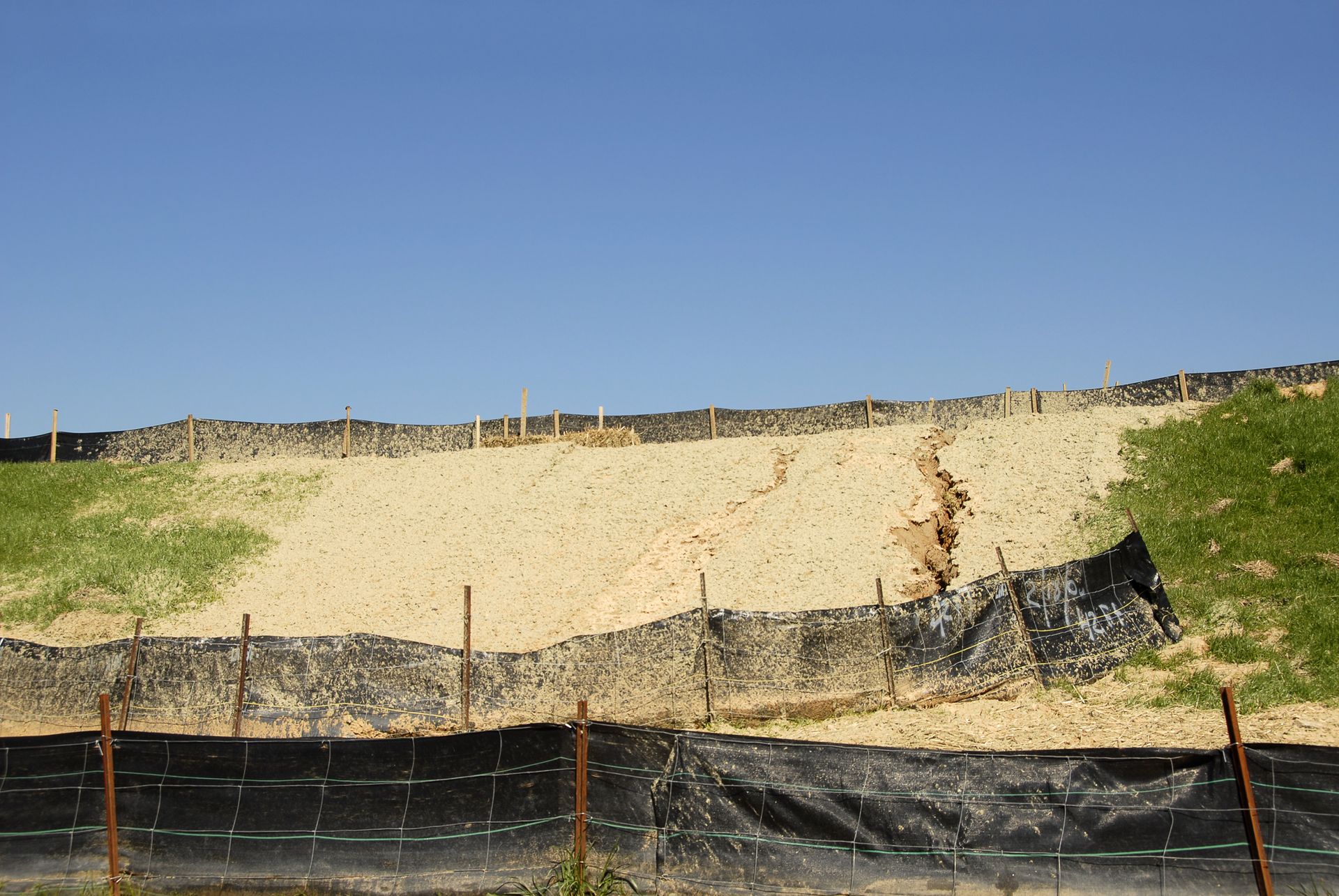
Stormwater best management practices help mitigate the impact of stormwater runoff on local infrastructure and ecosystems while keeping you in compliance with NPDES rules.
When soil is disturbed, natural drainage patterns change immediately. Rainfall that once soaked into the ground begins to run off, picking up sediment, pollutants, and debris.
Without proper stormwater controls, that runoff can damage downstream waterways, overwhelm municipal systems, and put projects at risk of violations, stop-work orders, and costly remediation.
Stormwater best management practices (BMPs) exist to prevent these outcomes. But BMPs only work when they are selected correctly, installed at the right time, and actively maintained throughout construction.
This guide outlines 15 stormwater best management practices for construction sites, with a practical focus on erosion control, drainage management, and real-world compliance.
The Importance of Stormwater Management
Stormwater management plans are federally mandated for any project that disturbs over one acre or more of land and for several state and municipal land permits.
Beyond compliance, stormwater management provides real-world ecological benefits, such as:
- Reducing sediment and pollutant discharge into nearby streams, rivers, and wetlands
- Preventing erosion that degrades aquatic habitats and water quality
- Protecting downstream storm sewer systems from clogging and overload
- Minimizing flooding and runoff-related damage to adjacent properties
- Preserving natural drainage patterns and soil stability during construction
From a project standpoint, poor stormwater control increases cleanup costs, extends schedules, and creates unnecessary friction with regulators and communities.
Effective stormwater management helps keep sitework on time and budget.
What Are Stormwater Best Management Practices?
Stormwater best management practices (BMPs) are structural and non-structural measures used to control runoff, prevent erosion, and reduce pollutant discharge from construction sites.
BMPs are typically categorized into three groups:
- Erosion control BMPs – prevent soil from becoming dislodged
- Sediment control BMPs – capture sediment after erosion occurs
- Drainage and runoff controls – manage the direction, volume, and velocity of water
A compliant stormwater program uses all three categories together. Relying on sediment controls alone is one of the most common and costly mistakes made on jobsites.
The following are 15 of the most common stormwater management techniques we have employed on sites of all types across the country.
15 Most Common Stormwater Best Management Practices for Construction Sites
1. Limit Land Disturbance
Reducing surface land disturbance will reduce erosion and sediment that can run off during a storm. In turn, you won’t have to invest as much money in artificial barriers and controls to prevent soil erosion.
In addition, many natural spaces, such as forests and other vegetation, are effective at increasing water infiltration, slowing the speed of stormwater runoff, and even increasing evapotranspiration (the rate at which water evaporates from the ground into the atmosphere).
One tip we suggest is to confine worksite equipment and vehicles to small, specific areas to minimize total land disturbance, whether from physical construction activity or transport.
Keep washout stations separate but confined to workspace areas, as well as portable toilets and break stations where crew members will tend to congregate.
2. Preserve Natural Vegetation
Preserving vegetation provides the added benefit of reducing the time and money spent on revitalizing a work zone.
Plan to conserve natural features when designing a worksite, such as redirecting roads around forests and gardens where vegetation can aid in stormwater runoff.
Likewise, be conscious of damaging trees when constructing fencing or roads, as this could be dangerous.
Take soil samples and evaluate the age and condition of trees before clearing them to determine if they may be helpful far down the road. For example, evergreen trees can help shield buildings from winter cold winds, helping them conserve energy.
3. Increase Water Infiltration
Water infiltration is the process by which water is absorbed through soil and other natural features as it travels across the land surface. Increasing water infiltration using well-aerated soils and natural vegetation helps reduce the total volume of water being discharged from a worksite.
There are many natural ways to increase infiltration, including:
- Crop rotation
- Employing a diversity of plants
- Reducing soil compaction
- Reducing soil tillage
- Covering plants and exposed soils with cover crops
- Applying fertilizers
In addition, we have many artificial tools at our disposal, including permeable pavements that absorb water rather than allowing it to flow unimpeded, as with concrete or asphalt.
4. Use Man-Made Erosion Controls
Erosion and sediment control are major concerns for construction crews because runoff can mix with dirt, polluting water systems.
Reducing topsoil erosion is the easiest way to prevent sedimentation, increase infiltration, and slow the spread of stormwater runoff. Some erosion best practices include:
- Applying mulch to slopes
- Using erosion control blankets on exposed soils
- Using vegetative coverings to protect surface soil
- Applying temporary seeding to disturbed soils
5. Grade Slopes to Reduce Their Runoff Coefficient
Another effective method to reduce topsoil erosion is to reduce the velocity of runoff relative to the rainfall, otherwise known as the runoff coefficient. One way to do this is by physically altering the slope of a hill to reduce water concentration in one area.
For example, by grading slopes with radial drainage patterns, you can prevent water from rushing down a hill at one particular curve and destroying the soil exposed in that area.
6. Use Downspouts and Swales to Redirect Stormwater
Similarly, you can reduce the runoff coefficient of a slope by redirecting stormwater with several different control mechanisms, including downspouts, swales, and bioretention areas.
Downspouts can be installed at specific points along the slope to redirect stormwater to the bottom without exposing the hillside soil.
Vegetative or rock swales are similar to ditches, helping slow the flow of stormwater runoff and even trapping some of it. Likewise, bio-retention zones allow for the natural infiltration of vegetable-rich soil.
7. Capture Sediment Laden Water
Once significant erosion occurs, loose sediments can enter the water, causing pollution and turbidity that kill marine life. However, several tools are at an operator’s disposal to trap sediment-water and treat it before discharging it back into public water systems.
Silt fences, compost bags, fiber logs, and filter bags can be applied at the top and base of slopes to help trap large sediment particles and separate them from onrushing stormwater. Added precautions, such as detention basins, can be built at the bottom of hills to hold large quantities of stormwater so that they can be treated before discharge.
8. Use Storm Drain Filters and Protection
Storm drain inlet protections and filters can be applied around storm drains as a last line of protection to separate sediment before it’s discharged into municipal sewage systems.
9. Eliminate Curbs and Gutters Until Construction Has Been Completed
While gutters and downspouts protect worksites from damage, they can jeopardize your stormwater management efforts if not carefully controlled. Since gutters tend to divert water away from buildings wherever they can, you need to be strategic about how you set up gutters and curbs, which tend to channel concrete runoff into specific areas of your construction zone.
10. Create Special Bays for Vehicle Washouts
Many state and federal agencies prohibit discharge from commercial vehicle washouts into public water systems. Instead, worksites will need to use portable wash pads or a compliant commercial car wash system. In addition, it’s recommended that all storm drains near washout stations are properly protected to prevent unlawful discharge.
11. Properly Store and Cover Worksite Materials
Most SWPPPs feature provisions for worksite material handling and storage, as runoff from these materials can contain several toxic substances, including paint, stucco, concrete, and more.
Create special provisions for storing and covering these materials in a safe area where they will not be exposed to the elements.
12. Train Employees and Subcontractors on Procedures
Train all crew members and subcontractors responsible for maintaining these BMPs to ensure they follow proper procedures. We stress training subcontractors, as many operators tend to overlook them, though they are still liable for any mistakes they make on a job site.
13. Conduct Frequent Inspections
Shore-up operations by conducting frequent inspections with a qualified consultant to ensure that all stormwater best management practices are being followed. Inspections should range from equipment handling to physically assessing the state of your erosion controls to ensure they are stable.
A single vulnerability or weakness can result in stormwater pollution, so federal agencies recommend conducting inspections every 7 days or within 24 hours of a severe weather event.
14. Hired Qualified Personnel to Draft an SWPPP
Dot every “i” and cross every “t” by hiring a qualified consultant to help you draft your SWPPP.
Most construction general permits require hiring one anyway, but be sure to find a consultant you trust with the experience to draft a proper SWPPP that will protect your business.
15. Stabilize Workzones After Construction Has Ceased
Last, and certainly not least, you’ll need to stabilize worksites after construction has ceased. Fortunately, by following the strategies above, you’ll invest significantly less in reseeding and replanting disturbed vegetation to avoid liability.
Stormwater management is an essential part of protecting our environment. Let the experts at Path Light Pro help you draft an SWPPP that targets all potential sources of pollution and protects your business from liability. We have the experience and knowledge to help you navigate every regulation and save money on stabilization efforts.
FAQs
1. What is the purpose of stormwater BMPs on construction sites?
To control runoff, prevent erosion, and reduce sediment and pollutant discharge from disturbed areas.
2. Are stormwater BMPs required on all construction sites?
Most sites disturbing one acre or more require BMPs under NPDES permits, though smaller sites may also be regulated locally.
3. What is the difference between erosion and sediment control?
Erosion control prevents soil from detaching; sediment control captures soil after erosion occurs.
4. How often must BMPs be inspected?
Typically, weekly and after qualifying rain events, per SWPPP requirements.
5. Why do stormwater controls fail most often?
Improper placement, undersizing, delayed installation, and lack of maintenance.
6. Can stormwater BMPs change during construction?
Yes. BMPs should be adjusted as grading, drainage patterns, and site conditions evolve.
7. Are sediment basins permanent structures?
No. Most are temporary and must be removed or converted once the site is stabilized.
8. What happens if stormwater BMPs are not maintained?
Failures can lead to sediment discharges, enforcement actions, fines, and project delays.